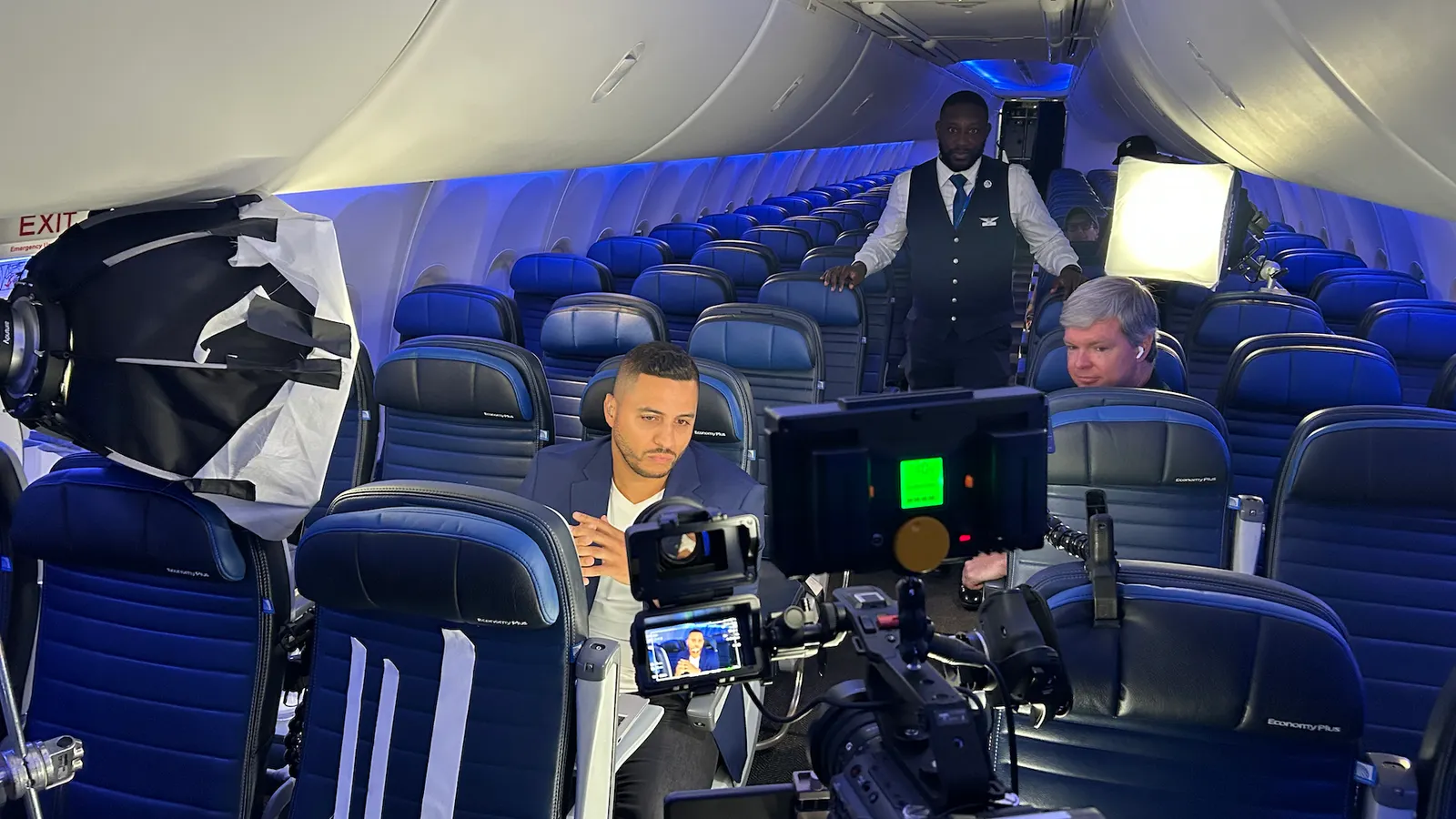
Picture this: you are 35,000 feet above the Atlantic, tray table down, and instead of pretzels and a mediocre movie, you are watching live fantasy football analysis while a media crew broadcasts from the seat next to you. It sounds like a gimmick, but it is actually a brilliantly executed marketing maneuver. United Airlines recently teamed up with a major sports media brand to host a fantasy football show live from an actual flight, and the activation is turning heads for reasons that go far beyond the novelty.
The initiative showcases how entertainment conglomerates are finding creative ways to help brands engage with audiences around live sporting events. With a certain championship game on the horizon, the timing was anything but accidental. This is not just about inflight entertainment; it is about transforming a captive audience into a participatory one.
The Intersection of Aviation and Audience Engagement
Airlines have long struggled with how to monetize the captive hours passengers spend in the sky. Traditional inflight entertainment is passive, a menu of movies and shows that passengers consume alone. This partnership flips that model on its head by creating a shared, live experience. Passengers were not just watching a screen; they were part of the studio audience, interacting with analysts and other viewers in real time.
For the entertainment giant behind the broadcast, the flight served as a floating billboard. It generated organic social media buzz, created memorable content, and demonstrated to other potential advertising partners that they can sponsor experiences, not just commercial breaks. The sky, it turns out, is a viable venue for brand storytelling.
Why Live Events Are the New Marketing Currency
In an era where consumers skip ads and scroll past sponsored posts, live events remain one of the few formats that command undivided attention. Live sports in particular have become the last bastion of appointment viewing. By aligning with that urgency, sponsors can borrow the emotional intensity of the game. This activation was not about selling plane tickets; it was about positioning the airline as a facilitator of passion.
This strategy works because it taps into a core human desire for communal experience. Watching a game alone on a phone is isolating. Watching it with fellow fans, even strangers at 30,000 feet, creates a sense of belonging. That emotional resonance is worth more than any banner ad.
The Business of sports marketing and Sponsorships
For years, sponsorship meant slapping a logo on a jersey or buying a 30-second spot. The industry has evolved into something far more intricate. Sponsors now demand integrated activations that feel native to the environment. The live flight broadcast is a textbook example of a custom experience built around a media property, offering a level of engagement that traditional media buys cannot replicate.
The economics are compelling. While the production cost of transforming a commercial flight into a studio is significant, the earned media value is likely much higher. News outlets covered the stunt, social media amplified it, and the brand association cemented itself in the minds of millions who were not even on the plane. That is the multiplier effect of a well-executed experiential campaign.
What Marketers Can Learn from This Activation
The first lesson is that context matters more than content. The same show broadcast from a studio would have been ordinary. Broadcast from a plane, it became a story. Marketers should ask themselves how to shift the context of their message to create a hook that journalists and audiences cannot resist.
The second lesson is about audience capture. A flight offers a unique demographic: business travelers, affluent consumers, and people with time to kill. These are not just viewers; they are potential customers with high disposable income. The activation also served as a live focus group, offering immediate feedback through passenger reactions and social listening.
If you are looking to build similar momentum for your brand, the key is to think about the intersection of your product and the audience’s passion points. Whether that means hosting a live Q&A during a major match or creating a pop-up experience that aligns with a cultural moment, the principle remains the same. And if you want to master the art of turning such engagements into revenue, our Affiliate Marketing course covers the exact mechanics of monetizing audience attention and building campaigns that convert. You can also explore our website design, search engine optimization, and digital marketing services with the famous trainer Nehme Sbeiti to take your strategy to the next level.
The Future of Branded Travel Experiences
This flight might be a one-off stunt, but its implications are lasting. Expect to see more airlines experimenting with themed flights, live podcasts, and exclusive previews. Captive audiences are valuable, and technology now allows for real-time interaction that was previously impossible at altitude.
For brands outside the travel industry, the takeaway is to think about where your audience is already trapped, be it a commute, a waiting room, or a long-haul flight. Then, consider how to transform that passive time into an active, shared experience. The tools to do so are readily available; the only limit is imagination.
As the media landscape fragments further, the premium will be on moments that bring people together. This airborne broadcast was a bold experiment, but it signals a clear direction: the future of marketing is not about reaching people where they are looking, but about creating places where they want to look. The airlines that embrace this, and the brands that partner with them, will find themselves ahead of the curve. The next time you board a plane, you might want to check if your seat has a microphone. You never know who might be broadcasting.