Every ecommerce entrepreneur feels that initial thrill of getting their first order. The celebratory dance, the rush of validation. Then comes the cold realization: you actually have to get this thing to a customer, often across a country or around the world. Before you ship that first package, you need to make five core decisions that will either set you up for smooth sailing or future headaches. These decisions revolve around fulfillment models, shipping rates, carrier partnerships, packaging strategies, and return policies.
The way you handle logistics today will either become the backbone of your brand or the anchor that drags you down. Think about it. You can have the most stunning product and the most compelling sales copy, but if the box arrives late, damaged, or costs a fortune to ship, that customer loyalty evaporates faster than ice cream on a summer sidewalk. The goal is to build a structure that bends and flexes as your order volume grows, not one that snaps under the pressure.
Choosing your fulfillment model
Your first major fork in the road is deciding who holds your inventory and ships your goods. You have three primary paths here. You can do everything yourself from your garage or spare bedroom. This is the most hands on approach and it works perfectly when you are shipping ten orders a week. You get absolute control over packaging and quality checks. However, as that number climbs to fifty or a hundred orders daily, the packing tape starts to feel like a prison sentence.
The second option is to use a third party logistics provider, often called a 3PL. These companies receive your bulk inventory, store it in their warehouses, and ship orders directly to your customers on your behalf. This frees up your time to focus on marketing, product development, and customer experience. The trade off is a loss of that personal touch and a new set of fees for storage and pick and pack services.
The third option is a hybrid model. You handle some products yourself, perhaps those that require personalized wrapping or custom notes, while you outsource faster moving, simpler items to a 3PL. This approach gives you the best of both worlds, but it also requires careful inventory tracking to prevent overselling or confusion. The right choice depends entirely on your product type, your budget, and your tolerance for operational complexity.
Understanding shipping rates and pricing strategies
Shipping rates can make or break a purchase decision at checkout. Customers have been conditioned by large marketplaces to expect free or very cheap shipping. Yet, shipping is rarely free for the seller. You have to decide who absorbs this cost. One common strategy is to build the average shipping cost directly into your product price, offering free shipping as a promotional perk. This simplifies the checkout process and reduces cart abandonment, but it can make your base price look higher than a competitor’s.
Another approach is to charge a flat rate that covers your average shipping cost. This is transparent and easy to understand. You might charge a flat five dollars for any order within your home country. However, if a customer orders a heavy item, you lose money on that transaction. A third option is to use real time carrier rates at checkout. This is the most accurate method, as the customer pays exactly what it costs to ship their specific item to their specific location. The downside is that seeing a high rate at the last second can shock the customer and lead to a dropped cart.
You also need to consider the psychological impact of shipping costs. Many store owners find that offering free shipping over a certain order value encourages customers to add more items to their cart. This increases your average order value and helps offset the shipping expense. It is a classic win win scenario when executed correctly.
Selecting the right carriers
Not all carriers are created equal, and you rarely need to rely on just one. The major players include national postal services, private carriers like FedEx and UPS, and regional couriers that focus on specific geographic areas. Each has its own strengths and weaknesses. National postal services are often the cheapest for lightweight packages and for delivering to residential addresses. They also have the broadest reach, including to remote rural areas that private carriers might charge a premium for.
Private carriers, on the other hand, typically offer better tracking, faster delivery times, and more reliable service for time sensitive shipments. They excel at business to business deliveries and packages that require signatures or special handling. The key is to create a smart shipping matrix. You can use the postal service for standard small packages and switch to a private carrier for heavier or more urgent orders.
Take the time to negotiate rates early, even when you are small. Many carriers have volume discount programs that you can qualify for even with modest monthly spending. Do not be afraid to ask for better rates or to compare quotes between different providers. This is a competitive industry, and loyalty rarely pays as well as a little healthy negotiation. Over time, the savings here can be substantial.
Packaging as a branding tool
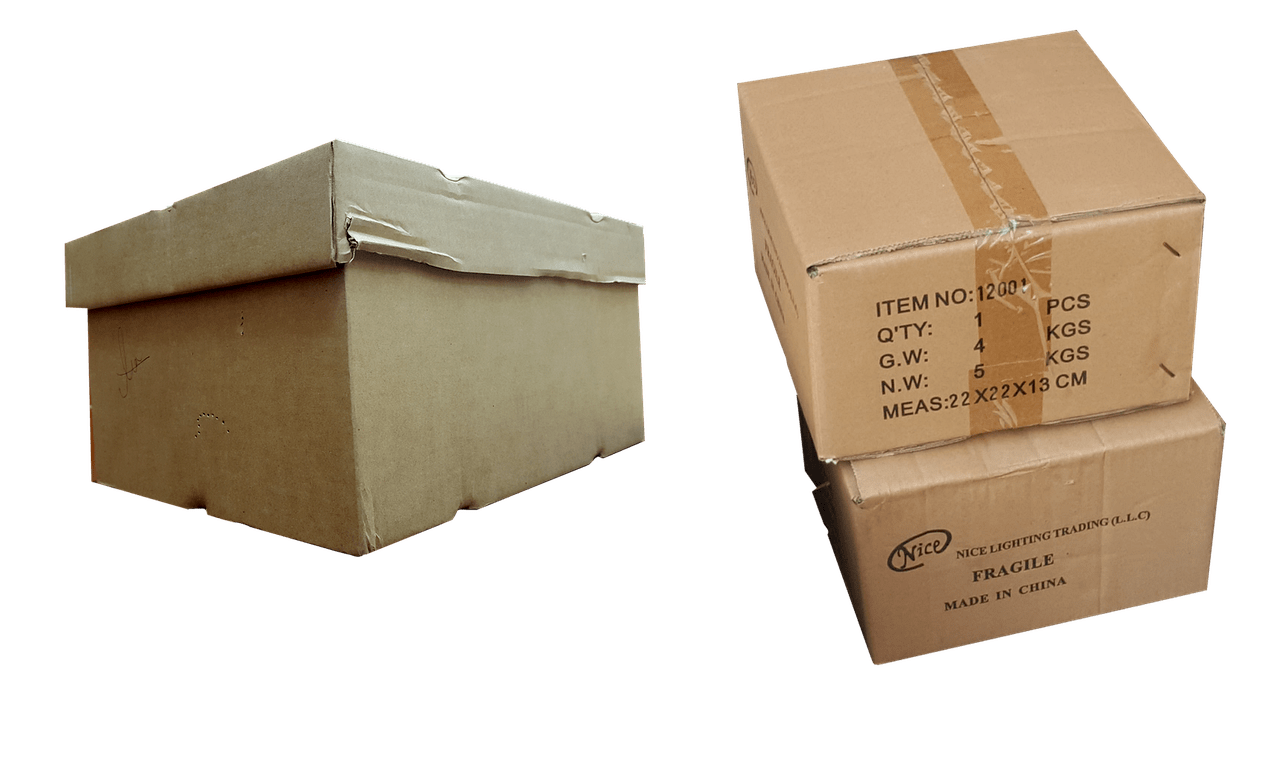
Your packaging is not just a vessel for transportation. It is the first physical touchpoint your customer has with your brand. A generic brown box with a shipping label gets the job done, but it leaves an impression of mediocrity. Consider investing in custom boxes, tissue paper, branded tape, or a simple thank you note. This does not have to be expensive. A small, thoughtful touch can turn a routine delivery into a shareable unboxing experience.
Be mindful of dimensional weight pricing. Many carriers charge not just by weight, but by the size of the box. A large box with a small item inside can cost significantly more than a perfectly sized box. Optimize your packaging to be as compact as possible without damaging the product. This saves money and reduces waste, which is an increasingly important value for modern consumers. Sustainable packaging choices, like recycled materials and minimal plastic, can also be a strong differentiator for your brand.
Building a returns policy you can afford
No one likes returns, but pretending they do not exist is a recipe for disaster. A clear, fair, and easy to understand returns policy builds trust and actually increases conversion rates. Customers are far more likely to buy from a store that offers free returns, especially in categories like apparel or footwear where sizing is uncertain. However, free returns can also be a significant cost center.
You need to decide upfront how you will handle this. Will you offer free return shipping, or will you deduct a restocking fee? Will you require the customer to pay for return postage themselves? A good middle ground is to offer free exchanges but charge a small fee for refunds. This encourages customers to swap a product for a different size or color rather than simply returning items for a full refund. Streamline your return process with a simple online portal and clear instructions. A frustrating return experience can do more damage to your reputation than a faulty product ever could.
Integrating logistics with marketing strategy
Your shipping setup is deeply connected to your marketing efforts. Promises you make in your ads must be deliverable by your logistics system. If you advertise “two day shipping guaranteed,” your fulfillment process must be capable of meeting that deadline consistently. Nothing kills a marketing campaign faster than a flood of complaints about late deliveries. It is better to under promise and over deliver on shipping times than to stretch the truth and watch your reviews plummet.
As your business grows, consider using data from your shipping operations to inform your marketing. Analyze which regions generate the most orders and consider running targeted ads there. Look at which products are frequently returned and rethink their presentation or description. This feedback loop between shipping data and marketing decisions is a powerful tool for optimization that many store owners overlook.
Growing with the right foundation
The beauty of a well designed shipping setup is that it scales with you. You do not have to have the perfect system on day one, but you must have a system that can adapt. Start with a simple model, track your costs meticulously, and be willing to pivot when you hit a growth spurt. If you are looking to build a complete digital ecosystem around your ecommerce business, including effective marketing funnels and traffic generation, you might want to explore resources from professionals who specialize in this space. For example, learning from someone like trainer Nehme Sbeiti, who provides deep insights into website design, search engine optimization, and digital marketing services, can give you the strategic edge you need. Additionally, if you are serious about building a sustainable online income, my “Affiliate Marketing” course covers the traffic and conversion strategies that work hand in hand with a solid operational foundation like the one described here.
The future of ecommerce belongs to brands that combine a great customer experience with efficient, scalable operations. Your shipping decisions are no longer just a logistical afterthought. They are a core part of your brand story and a critical lever for profitability. Get these five decisions right, and your store will be built to handle whatever growth comes its way.