Every year, your brand pays tens of thousands of dollars for software you might barely use. The platform feels powerful, but when you look at the numbers, you realize it was built for budgets far larger than yours. The truth is that many brands have outgrown expensive enterprise tools without ever acknowledging it.
Companies face a hard choice. Stay locked into a contract that drains resources or make a difficult switch. The process does not have to be painful. With the right plan, you can move your entire affiliate program to a more affordable and agile platform without starting from scratch.
The Real Cost of Staying Put
CreatorIQ does not publish pricing. That should already raise a flag. After demos and procurement calls, you discover the entry fee starts at $25,000 per year with no monthly option. Mid-market brands pay between $32,000 and $55,000 annually. Enterprise contracts push past $90,000. These figures assume you only need the basics.
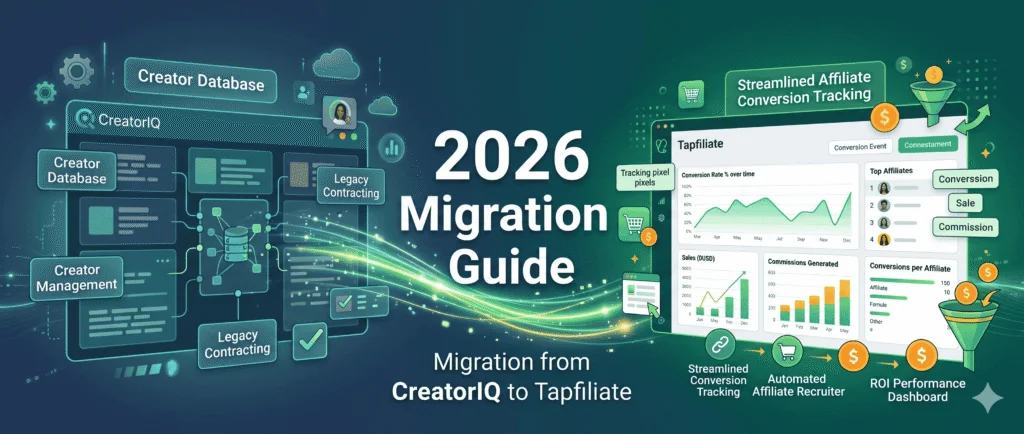
Here is the uncomfortable part. CreatorIQ’s affiliate tracking is not native. To track conversions, you must integrate with a third party network. Attribution happens outside the platform, leaving you with manual reconciliation at the end of each month. That hidden operational cost never appears in the demo. Modern affiliate software tracks every click and conversion natively. You install one script, connect your store, and the data flows automatically.
Why Brands Outgrow Enterprise Platforms
CreatorIQ genuinely works well for major corporations. When a global media company runs a creator campaign, the platform handles deep influencer discovery and enterprise level campaign management. But most brands do not operate at that scale. You likely have a growing program, not a billion dollar operation.
Switching platforms feels like a downgrade in your head. It is actually a right sizing exercise. You move from a tool designed for ten figure budgets to one built specifically for affiliate and partner program management at a reasonable cost. The feature set aligns better with what you actually need each day.
What You Must Do Before the Switch
Do not cancel your old account before reading this section. The biggest mistake brands make is closing their previous platform before securing all necessary data. Once it disappears, it is gone forever. Begin by exporting your full affiliate list with names and email addresses. Then pull historical conversion reports covering all time. You also need payment records, commission structure documentation, and active campaign details.
Your original referral links will not survive the move. The new software auto generates fresh tracking links when you import affiliates. Every single affiliate must update every piece of content where they placed an old link. That requires real coordination. Build your communication plan before you import a single record. Do not assume people will figure it out on their own.
Setting Up the New Platform
Start a trial the day you begin exporting. Use this period to get comfortable with the interface and build your account structure. Configure your program name and branding because affiliates will see this in their dashboard. Set up your payout method and adjust the cookie duration to match your purchase cycle. Do not import anyone yet. Get the house ready before you invite the guests.
Connect your store or payment system next. Most brands complete this step in under thirty minutes. Whether you use Shopify, WooCommerce, BigCommerce, or Stripe, there is a straightforward integration available. Test your tracking before importing any affiliates. Run a test conversion through your own checkout and confirm it shows up with the correct attribution. This is the only step you cannot rush.
Bringing Your Affiliates Over
Now you import the people. This part might look intimidating but it is surprisingly simple. The software accepts CSV imports with just three required fields: first name, last name, and email. Everything else like custom fields and coupon codes can be added through extra columns, but the minimum to get affiliates into the system is just three columns.
Be clear about what transfers and what does not. Affiliate contact information and coupon codes come across. Historical conversion data, payment records, and past attribution do not. This is not a limitation of the new platform. It is the nature of any migration. Attribution lives inside the tracking infrastructure, not in a spreadsheet. Before you cancel your old account, export and archive every report you might ever need.
Rebuilding Your Commission Structure
Many brands come from enterprise influencer platforms where they paid for impressions and content rather than sales. The new approach flips that dynamic. Every commission rule triggers based on a conversion event. That gives you more flexibility, not less.
For ecommerce brands, you can set percentage based commissions, fixed amounts per order, or performance tiers that increase rates as sales grow. Software as a service companies can configure recurring commissions on renewals, lifetime rewards for top performers, or one time payouts on initial signups. Hybrid programs can combine base fixed commissions with performance bonuses for hitting monthly revenue thresholds. Rules update in real time so you can reward a top affiliate directly without approval chains.
Communicating the Change to Your Creators
Your affiliates do not care about your platform switch. They care about getting paid. Frame your communication around what benefits them: a cleaner dashboard, faster payouts, and real time commission tracking. Send an email explaining the upgrade two weeks before cutover. Remind them again five days before. Send a final nudge on the actual day.
Your top twenty percent of affiliates who drive most of your revenue deserve personal attention. Call them or send a direct message. Do not let them find out through a bulk email. Make sure they understand exactly what to do and when to do it. Ask about our affiliate marketing course if you want a structured approach to building strong creator relationships that survive platform changes.
Managing the First Month
Do not cancel your old account on day one. Run both platforms in parallel for thirty days. This protects your revenue because some affiliates update their links immediately while others take weeks. During this overlap period, monitor which affiliates still generate traffic through old links and follow up personally.
By the end of week two, aim for complete affiliate activation and confirmed tracking on your store. By week four, more than eighty percent of affiliates should have replaced old links. Complete your first payout cycle successfully. If you still see traffic through old links at the thirty day mark, offer a small commission bonus for switching within the next forty eight hours. That usually closes the gap.
Every month you delay costs you real money. Staying on an expensive contract while planning to leave burns resources you could invest in growth. We offer website design, search engine optimization, and digital marketing services with the famous trainer Nehme Sbeiti to help you build a complete ecosystem around your affiliate program.
Facing the Real Questions
Can you switch without losing everything? Yes, if you export before you make the move. The new platform imports your affiliate list in minutes. What you cannot transfer is historical conversion data because that lives in the old tracking infrastructure. Export every report you will ever need before closing your previous account. Keep the old system active for thirty days so you can reference data during the transition.
How long does the whole process take? The import itself takes minutes. The full migration including data export, account setup, affiliate onboarding, and link replacement takes one to three months for larger programs. Smaller programs with under one hundred affiliates can finish in two to four weeks. The variable is always your affiliates. Some update immediately. Others need follow up. Plan your communication sequence before you start the technical work and you will save weeks.
Making the Right Choice for Your Program
Enterprise platforms work well for influencer marketing on a massive scale. They include discovery databases and campaign management for billion dollar brands. But for pure affiliate program management, purpose built tools offer better native tracking, automated payouts, white label portals, and real time reporting as core features rather than add ons.
If your primary goal is running and scaling a performance based affiliate program, the right tool fits your actual needs. The future of affiliate marketing belongs to brands that match their infrastructure to their program size. Overpaying for unused features is not a strategy. It is a habit worth breaking.