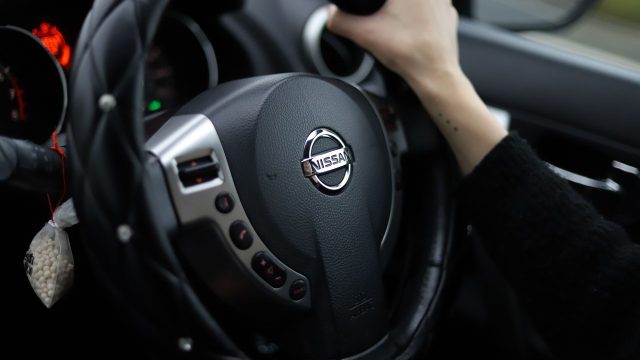
The adage that history repeats itself is no more apparent than the current state of affairs at Nissan North America. The Wall Street Journal’s interview with Christian Meunier, head of Nissan NA, is so frighteningly similar to 1999 that I had to catch my breath. Yet, as with a lot of executives and marketers, the current plight of a troubled brand is a new situation, as if this state of affairs has never happened before, a challenge to be tackled and changed. Mr. Meunier seems to be avoiding the understandings, learnings, and actions that turned around Nissan and Infiniti in the 1999-2001 Nissan Renaissance, as it came to be known.
The current challenges facing Mr. Meunier and Nissan NA are recognizable. Sliding sales, less-than-stellar brand image, worsening dealer relationships, and a managerial crisis stemming from the arrest and departure of Carlos Ghosn. In 1999, sales were also sliding. The Nissan image was so awful that a dealer would need to offer over $1,000 as an incentive to buy a Nissan rather than a Toyota. Dealers were unhappy. The takeover of Nissan by Renault, with French executives and managers running its units, caused grief within the Japanese ranks. So much so that one Japanese manager committed harikari (seppuku).
As for Infiniti, Carlos Ghosn was just a moment away from pulling the plug on that brand. Infiniti had never gained the driver’s seat among customers, as Lexus had. Infiniti’s exquisite-looking introductory advertising showed the vehicle in the woods, artfully presented with a focus on the door handle. Lexus showed a luxury vehicle with a tower of champagne glasses that did not topple because its ride and handling were so smooth. Style but little substance.
The Provenance of a Promising Brand
Nissan is a brand with “strong DNA,” as Mr. Meunier states. Products that expressed the Nissan DNA, such as the 280Z from 1975 to 1978 and the earlier 240Z from 1969 to 1973, dubbed the poor man’s Ferrari, are collectors’ items. The Xterra was an iconic lifestyle brand designed by the late legendary designer Jerry Hirschberg and his team at the La Jolla, CA, Nissan Design Studio.
When Jerry Hirschberg spoke about how the Xterra came to be and how the designers executed the vision, you became entranced. Xterra was not about being “edgy” as Mr. Meunier suggests. Xterra was about bold, boundless practicality. As was the Nissan brand. This is a critical distinction for any brand strategist to grasp. Boldness, when applied correctly, creates a magnetic pull. Edginess can sometimes push people away.
Rediscovering the Foundation of Nissan’s brand promise
In the Nissan Brand Orientation for all Nissan dealers, the brief dealership educational piece from The Nissan brand identity book, the Nissan brand had clear elements created during multiple sessions of the global Nissan Brand cross-functional team. The Brand Values targeted customers who set their own standards and maximized life. The Functional Benefits focused on a fusion of advanced technology and design for human benefit, combined with superior agility and responsiveness.
The Rewards were clear: customers felt the products were imaginatively designed with them in mind, evoking a passionate total car experience. The Brand Personality was defined as “Bold and Thoughtful.” Bold meant being original, challenging, forward looking, and engaging. Thoughtful meant authenticity, thoroughness, ingenuity, sincerity, and consistency. This is not a recipe for “edgy.” This is a recipe for a trustworthy, exciting relationship between a brand and its customers.
Lessons from the Infiniti Renaissance
While the Nissan Brand cross-functional team was generating the input for the Nissan Brand Promise, the Infiniti group went through a similar set of exercises, including a very dramatic photo sort. A photo sort is a pictorial research technique to elicit subconscious information about feelings and concepts about a brand that are sometimes difficult to articulate. With Infiniti, the photos all team members had in common were of old and new versions of an item. Think of a covered bridge versus a Calatrava bridge, or a rocking chair versus an Eames chair. Infiniti optimized elements of Japanese culture and technology.
Along with the other input, the idea emerged that Infiniti was the epitome of grace and strength. The brand promise, “Graceful Strength,” had specific drivers. The values included embracing the promise of the future and being uncompromising. The functional benefits were the artful expression of refined power and an anticipatory, fine-tuned product and ownership experience. The reward was invigoration and personalized exclusivity. The personality was defined as refined power, thoughtful innovation, serene dynamism, and artistic substance. This was a far cry from a generic luxury pitch.
What “Bold” Actually Means for a Brand in Crisis
Mr. Meunier tells The Wall Street Journal that past Nissan products were “exciting.” True. He also tells The Wall Street Journal that those exciting products were “fun to drive, fun design and different, edgy products.” Here is the core of the marketing problem. Bold is daring and adventurous. Edgy might be something else entirely.
Boldness, as defined in the original brand architecture, is about being original and forward looking, not about being provocative for the sake of being provocative. An edgy product might attract attention, but it rarely builds the deep, abiding loyalty that a brand like Nissan needs to survive. The brand’s provenance, its history, and its core promise are not relics to be discarded. They are the foundation upon which a new, successful future must be built. The power of provenance is not about preserving everything from the past; it is about preserving the best of the past for the present and future.
The Strategic Path to Brand Revitalization
Building a brand strategy is not unlike building a successful online business. You have to start with a clear promise and then deliver on it consistently. For example, on our “Affiliate Marketing” course, we teach that the foundation of any successful campaign is understanding your audience’s deepest needs and delivering value that matches your core promise. The same applies to a massive automotive brand like Nissan. You cannot just chase trends. You must return to the values that made you great.
If you are looking for expertise in website design, search engine optimization, and digital marketing services, working with a seasoned professional like the famous trainer “Nehme Sbeiti” can help you translate these complex brand principles into actionable digital strategies. The core lesson remains the same across industries. A brand is a promise. If you break it, you break the relationship.
A Forward-Looking Insight for Nissan
Of course, the work with Nissan from the late 90s is over 25 years old. However, a brand’s provenance is not to be ignored. The greatest risk for Nissan today is not its lack of good products. It is the risk of forgetting who it is at its core. The coming years will test whether the leadership can look backward with respect to gather the wisdom needed to drive forward with strength.
The future of Nissan depends not on inventing a new identity from scratch, but on courageously remembering and delivering on the brand promise that once made it an unstoppable force in the automotive world. That is a lesson that every marketer, in every industry, should take to heart.