The candy brand that famously dissolves on the tongue is now trying to dissolve the line between passive television watching and active audience engagement. M&M’s has entered a new partnership with the reality dating series Love Island USA. The campaign introduces limited edition Play Along Packs that transform the act of viewing into an interactive game. This is not just another sponsorship; it is a calculated move to capture the attention of a notoriously distracted audience.
For years, brands have struggled to break through the noise of second screen viewing. People watch television while scrolling through social media, texting friends, or shopping online. The challenge is not just to be seen, but to be participated with. M&M’s appears to have found a clever solution by embedding itself directly into the show’s cultural moments.
What Are the Play Along Packs?
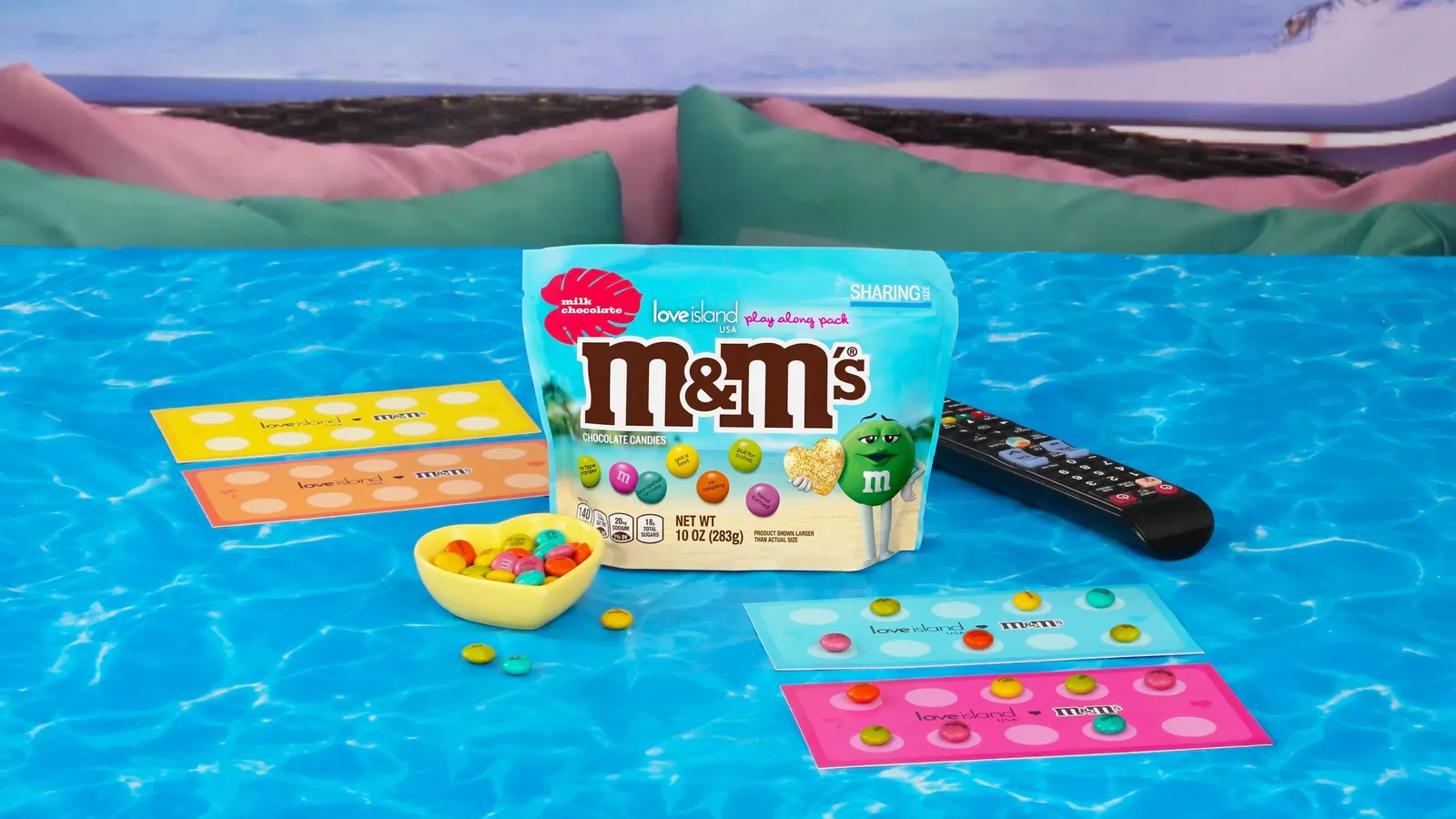
The centerpiece of this collaboration is a special edition product called the Play Along Pack. These packages contain M&M’s that have been imprinted with phrases directly lifted from the show. Think of iconic lines, inside jokes, and recurring expressions that fans of Love Island USA will immediately recognize. The idea is simple but powerful. Viewers can snack on candy while simultaneously playing a game that syncs with the episodes they are watching.
The Play Along Pack turns a bag of chocolate into a live bingo card. As characters on screen say certain phrases, fans can check off those phrases on their candy. It creates a moment of shared discovery and collective excitement. This approach works because it feels less like marketing and more like a secret handshake between the brand and the show’s community.
Exclusive Social Content Extends the Reach
In addition to the physical product, M&M’s is rolling out exclusive social media content. This content is designed to fuel conversation online during and after each episode. The brand is not just a silent partner; it is becoming a voice within the fandom. By creating shareable moments, M&M’s ensures that its name stays relevant in the digital water cooler conversations that happen around the show.
This strategy is smart because it leverages user generated content without forcing it. Fans will naturally want to show off their completed bingo cards or share their favorite M&M’s imprinted phrase. The brand becomes part of the story, not an interruption to it. This is a textbook example of how to use cultural relevance to drive product engagement.
The Evolution of branded entertainment
What M&M’s is doing here goes beyond traditional product placement. It is an example of what we might call interactive branding. Instead of simply placing a logo on a table for the camera to catch, the brand is building a mechanic that rewards viewer participation. This is a lesson for anyone involved in digital marketing or e-commerce. The most successful campaigns today do not just interrupt; they invite.
Think about the psychology at play. When someone buys a Play Along Pack, they are not just buying candy. They are buying an experience, a tool for social bonding, and a way to feel more connected to the show they love. This emotional hook is far more valuable than a simple impulse purchase. It creates brand loyalty that persists long after the bag is empty.
For marketers looking to replicate this kind of success, the key takeaway is to find the intersection between your product and your audience’s existing habits. Do not try to force a new behavior. Instead, enhance the behavior that is already there. If people are already watching Love Island USA and already eating snacks, why not combine those two actions into a single playful event?
This approach aligns well with modern strategies in affiliate marketing and digital commerce. When you understand the customer journey as a series of connected moments, you can insert your brand in a way that feels helpful rather than intrusive. If you are serious about mastering these techniques, you might consider exploring structured learning paths. For instance, my Affiliate Marketing course dives deep into how to build campaigns that feel like natural extensions of the user’s lifestyle. Alternatively, you can find expert guidance on website design, search engine optimization, and digital marketing services with the famous trainer Nehme Sbeiti, who specializes in turning passive audiences into active participants.
Why Gamification Works for Modern Audiences
Gamification is not a new concept, but its application in the context of live television is still relatively fresh. The reason it works so well here is that it feeds a fundamental human desire for competition and completion. People love checking things off a list. They love the dopamine hit that comes from recognizing a pattern or winning a small victory. M&M’s has essentially turned a bag of candy into a self contained reward system.
Furthermore, this tactic capitalizes on the fear of missing out, or FOMO. When a viewer sees friends online celebrating a completed bingo card, they will want to join the next round. This creates a cyclical loop of engagement that benefits both the show and the brand. The network gets higher viewer retention, and the brand gets more product movement and social visibility.
For e-commerce businesses, there is a direct parallel here. You can apply similar gamification mechanics to your own sales funnels. Loyalty programs, scratch cards, and progress bars are all versions of the same idea. The goal is to make the act of purchasing or engaging feel like a game. When done right, it reduces friction and increases repeat visits.
A Forward Looking Insight
As television continues to fragment across streaming platforms and social channels, the brands that survive will be those that adapt to the new rules of attention. M&M’s partnership with Love Island USA is a small but telling sign of where the industry is heading. We are moving away from passive consumption and toward active participation. The line between content and commerce will continue to blur. In the future, the most successful marketing campaigns will not just sell you something. They will invite you to play along.
The real winner here is not just M&M’s or Love Island USA. It is the idea that marketing can be fun again. It can be a shared experience rather than a broadcast message. Brands that understand this shift will find themselves not only surviving the digital age, but thriving within it.