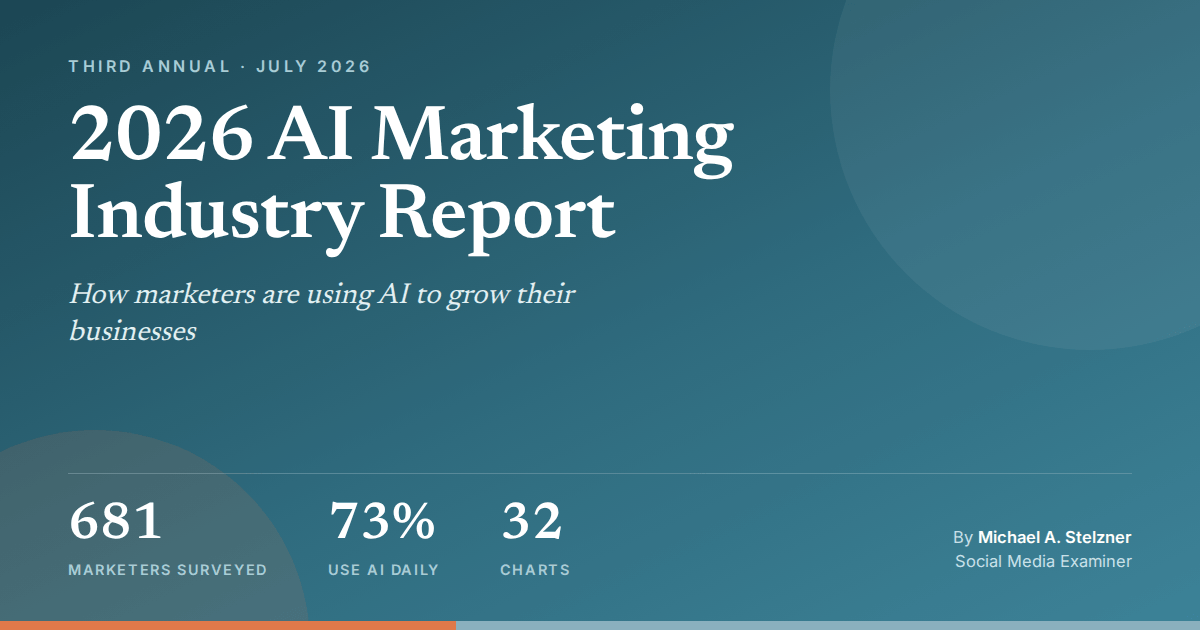
The numbers have shifted dramatically in a very short period. Just a couple of years ago, roughly one in three marketing professionals admitted to using artificial intelligence on a daily basis. Fast forward to today, and that figure has skyrocketed to nearly three out of every four. This isn’t a fleeting trend or a passing fad; it’s a complete overhaul of the marketing landscape. For those running a small enterprise, this data represents a crucial narrative, one that is largely filled with positive developments. Our comprehensive analysis for 2026 reveals a story about accessibility, efficiency, and surprising strategic shifts that every business owner needs to digest.
The Rapid Rise of Mainstream AI Integration
The adoption curve for AI tools has been nothing short of vertical. Small businesses, which often have to be nimble to survive, are leading the charge in this new frontier. They are not using AI to replace the human touch in their communications; instead, they are leveraging it to handle the repetitive tasks that once consumed valuable hours. This allows owners and their teams to focus on creative strategy, relationship building, and actually closing sales, rather than getting bogged down in the minutiae of content scheduling or hashtag research.
What is particularly striking is the speed of this transition. It took over a decade for social media platforms to become a staple of the marketing mix, yet AI has achieved near ubiquitous status in a fraction of that time. The driving force is clear: tangible, immediate results. When a small business can use a tool to draft email newsletters, generate product descriptions, or analyze customer feedback in seconds, the value proposition is simply too compelling to ignore.
How AI is Redefining the Daily Workflow
The most practical applications for AI in the small business sphere are surprisingly grounded. It’s less about futuristic robotics and more about sophisticated assistance with mundane chores. For instance, many are using these tools to brainstorm content angles or to clean up grammar and style in written communications. This isn’t just about speed; it’s about maintaining a level of professional polish that might otherwise require hiring a full-time copywriter, a luxury many small firms simply cannot afford.
This shift also impacts the customer experience on a deeper level. Chatbots, powered by vast linguistic models, are no longer the clunky, infuriating assistants of the past. They are capable of holding nuanced conversations, answering specific product questions, and even handling basic troubleshooting 24/7. For a business that receives inquiries after hours, this creates a safety net that captures leads and solves problems even while the staff is asleep. It is a level of service that levels the playing field against much larger competitors.
What the Data Reveals About Strategic Priorities
When you dissect the report data, a clear hierarchy of use emerges. Content creation is the undisputed king, with a majority of users leveraging AI to generate text for social posts, emails, and website copy. However, the second most common usage is far more analytical. Business owners are turning to AI to interpret campaign data, identify trends in customer queries, and optimize ad spend. This move from pure generation to analysis marks a maturity in how these tools are perceived by the market.
One of the most eye-opening findings, however, is the nuanced view on authenticity. Many small businesses report that they use AI to create a first draft, which they then heavily edit to infuse with their personal voice. In this sense, AI is not replacing the human voice; it is amplifying it. It acts as a high-speed proofreader or a blank canvas that helps overcome the dreaded “blank page syndrome.” The fear that AI would create a sea of identical, robotic content seems to be unfounded, as successful firms recognize the need for human oversight and unique personality.
The Bottom Line and Actionable Steps for Your Business
So, what does this mean for the independent entrepreneur or the small shop owner? It means that the barrier to entry for high-quality marketing has never been lower. You no longer need a massive budget to produce consistent, relevant material. However, having the tool is not the same as knowing how to use it effectively. Strategy remains the most critical component. You need to know what questions to ask the AI and how to align its output with your specific business goals.
To truly capitalize on this transformation, consider your current workflow and identify the areas that eat up the most time. Is it writing, research, or data sorting? Once you have identified these bottlenecks, you can start experimenting with specific solutions that address those pain points. This is also a fantastic avenue to explore alongside learning new skills, as understanding the mechanics of digital growth is essential. For those looking to monetize this knowledge, mastering the nuances of digital promotion is invaluable. You can learn effective monetization strategies to broaden your revenue streams in the modern economy.
Navigating the Future of Automated Marketing
We are moving away from the question of whether to use AI and toward the question of how to use it better. The businesses that will thrive are those that treat AI as a junior partner, one that requires guidance and supervision but can handle a massive workload. The ability to direct AI to find a specific target demographic or to tweak a campaign’s tone of voice will become a core competency for every marketer. This is not just a technical skill; it is a leadership quality.
The opportunity here is immense, but so is the responsibility to use these tools ethically and effectively. There is also a growing need for specialized knowledge in this area. Many businesses are seeking guidance on how to integrate these systems into their broader strategy, looking for experts who can bridge the gap between raw technology and business communication. It is here that the demand for specialized skills, such as those offered in web design and search engine optimization, accelerates. Working with mentors who understand this intersection is often the fastest way to see a return on your investment and avoid costly trial and error.
Looking ahead, it is clear that artificial intelligence will not just be a tool in the marketing kit; it will be the engine that drives it. As voice search, visual recognition, and predictive analytics become more advanced, the businesses that have already built a strong foundation with these systems will have a massive head start. The adaptive mindset you cultivate today will define your competitiveness tomorrow. The landscape is changing faster than ever, but for those willing to learn and adapt, the potential for growth is truly boundless.