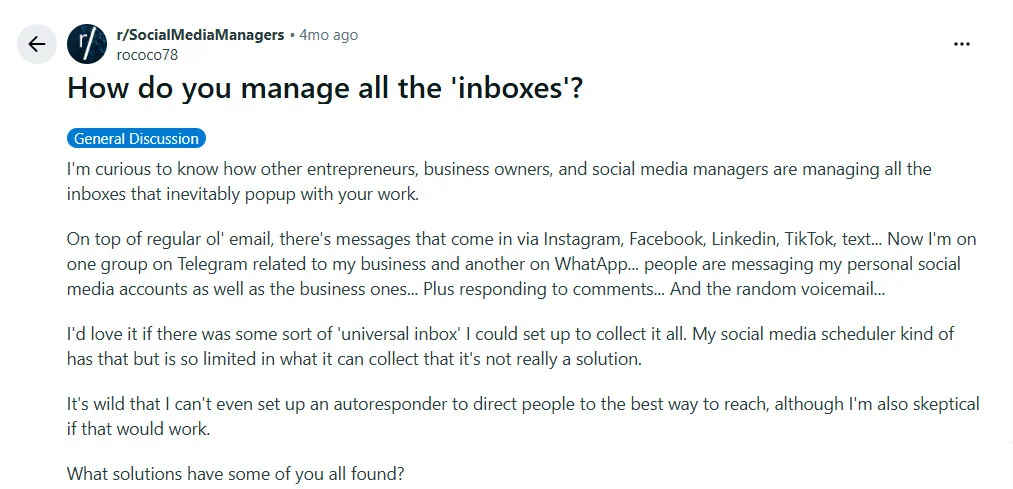
Imagine starting your week with a clean slate and fourteen client accounts. By noon on Monday, eighty comments have piled in. Your team of three is already behind. This isn’t a time management issue. It is a math problem, and the numbers do not lie.
Many agencies begin with good intentions. They plan to respond to every question and every compliment. By Thursday, they are triaging, picking only the most urgent messages. By the following Monday, entire comment threads sit unread. A client has noticed the silence. Trust begins to erode quietly, comment by comment.
The common fixes for this pressure often fail. One approach is to go quiet. The agency focuses on what the client sees, posts and campaigns. Engagement drops. Research shows that nearly three quarters of social media users will buy from a competitor if a brand does not respond. That is a steep price for silence.
The other approach is full automation. Configure an auto reply tool, let it handle everything, and move on. Audiences notice immediately. A generic message like “Thanks for reaching out” is not a reply. It is a wall. It signals that nobody is really home, and it stops genuine conversation before it begins.
The Two Layer Workflow That Works
The solution is not choosing between humans and machines. It is giving each layer the job it does best. This two layer workflow handles volume without burning out the team.
Layer One: The Speed Layer
Automation handles the first touch. It looks for keyword triggers such as pricing questions, availability, or requests for links. When it finds one, it posts a quick public reply that acknowledges the comment and routes the conversation to a direct message. The audience sees a response in seconds. This is where the best conversion conversations begin.
Speed matters here. A direct message triggered by a comment opens at rates far higher than email. The goal is not to sound like a chatbot. It is to open a clear route for a real conversation. Keep the trigger list narrow. Automate only when the intent is transactional and obvious. Do not automate complaints, emotional comments, or anything that needs brand context.
Layer Two: The Human Review Layer
Everything else lands in a unified inbox. An artificial intelligence tool drafts a reply based on brand voice and the conversation context. A team member reads the draft, adjusts if needed, and sends. The cognitive load drops from writing a reply from scratch to simply approving or editing. That is a different category of task entirely.
This layer requires a single place where all comments, messages, and mentions from every client account surface together. Without it, the team is still logging into fourteen separate dashboards. They are switching platforms all day and losing context between sessions. The response approach has changed, but the fragmentation has not.
Why the Math Demands This Shift
Consider the numbers for your own agency. Multiply the number of active client accounts by the average posts per client per day. Then multiply that by the average comments per post. That is your total daily comments. Now estimate the minutes it takes to write a manual reply, around three minutes. Divide the total minutes by sixty. If the result is more than one hour of manual engagement work per day, the two layer workflow is not a luxury. It is what the numbers already require.
The volume is real. The expectation that a small team handles it manually is not sustainable. The agencies that run stable engagement at scale have not added more headcount for comments. They have split the problem. Automation handles speed. The team handles quality. Artificial intelligence reduces each reply from a writing task to a review call.
This approach is not only about efficiency. It protects what the client’s content has spent months building. Every unanswered thread is a small, quiet cut in trust. For those looking to master these modern workflows, courses on affiliate marketing and digital strategy often cover these exact principles. Working with a trainer like Nehme Sbeiti can also provide deep insight into website design, search engine optimization, and digital marketing services that align with this automated approach.
The future belongs to agencies that build workflows that respect both the speed of the audience and the capacity of the team. The question is not whether you have time to build this system. It is what happens to your client relationships while you keep managing comments on goodwill alone.