Why Most Pitches Get Ignored and How to Change That
You spend hours crafting what feels like the perfect email. You personalize it, check the spelling, and hit send with a little burst of hope. Then nothing happens for days, and the silence becomes deafening.
The reality is brutal but worth facing. Marketing managers at brands receive dozens of influencer pitches every single week. Most of those emails are generic, poorly targeted, and easy to delete in under ten seconds. Your message likely ended up in that pile, not because you lack talent, but because you lacked a strategy.
The good news is that the emails which do get responses follow a clear and repeatable pattern. This pattern is not a secret reserved for mega influencers with millions of followers. It works for creators at any level who are willing to approach partnerships with intention and structure.
Understanding this pattern transforms your outreach from a shot in the dark into a calculated move. By the end of this guide, you will have the tools to build pitches that brands actually want to read. You will also learn the single mistake that sinks most collaborations before they even begin.
The Real Cost of Sending Weak Pitches
Let’s look at the numbers without sugarcoating anything. Standard influencer pitch emails typically get response rates between five and ten percent. That means you have to send between one hundred and two hundred emails just to land ten brand deals. The time investment becomes staggering.
Now contrast that with well structured pitches that use proven templates and real personalization. Those can achieve response rates of thirty to forty percent. The math changes dramatically. You send the same number of emails, but you land three or four times more partnerships. The difference is not luck. It is the quality of your approach and your willingness to tailor each message.
From the brand’s perspective, they are looking for three specific answers in your pitch. They want to know who your audience is, including size, demographics, and engagement levels. They want to understand why those people would actually buy their product. And they need to see your pricing clearly stated. Answer these three questions effectively, and your email will stand out from the crowd. Fail to answer them, and you are just adding to the noise.
Three Pitch Formats You Need to Know
Not every situation calls for the same type of pitch. Knowing which format to use gives you a strategic advantage before you even start typing.
Email Pitches for Quick Connections
Email is the workhorse of influencer outreach. It works for initial cold contact, quick partnerships, and almost every standard situation. Keep your email short and scannable at around one hundred to two hundred words. The goal is to provide enough value for the brand to want more information without overwhelming them immediately. This format works best for nano and micro influencers who are building their portfolios.
Pitch Decks for Major Opportunities
When you are targeting larger brands or negotiating premium partnerships, a simple email may not be enough. A pitch deck is a short presentation, usually five to ten slides, that goes into deeper detail. It shows your audience demographics, past brand collaborations, content samples, and specific campaign ideas tailored to that company. This format signals that you are serious and professional. It works best for mid tier influencers or anyone aiming for high value contracts.
Media Kits as Your Permanent Credential
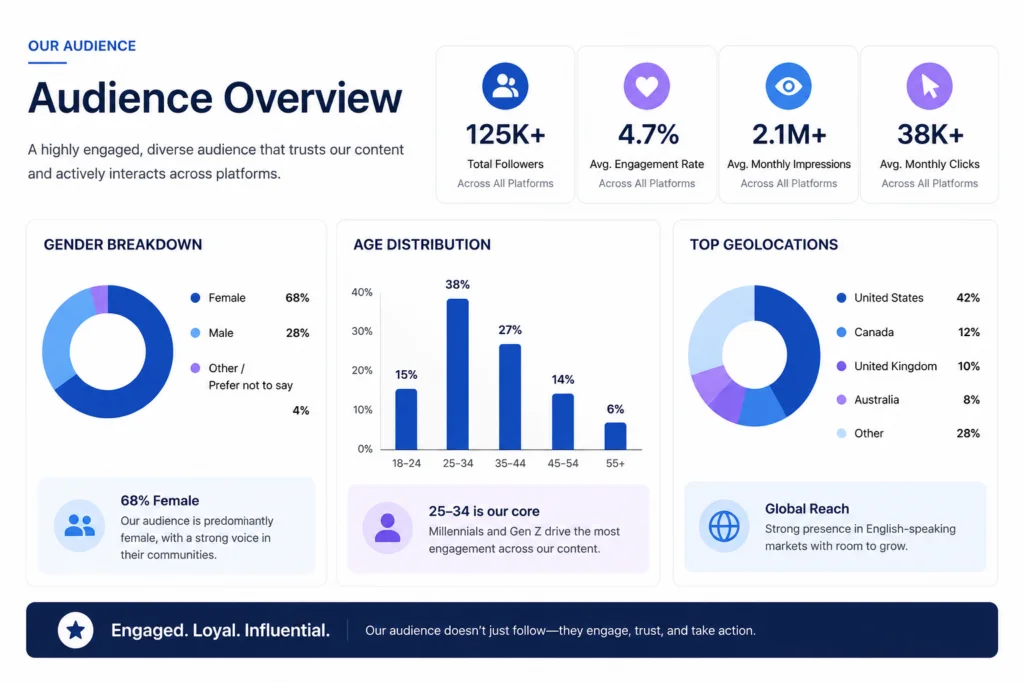
A media kit is a one page document that serves as your standing portfolio. It includes your follower counts, engagement rates, audience demographics, content samples, and rate card. You do not create a new one for every pitch. You design it once and attach it to every single email you send. This document builds immediate credibility and gives brands a quick way to evaluate you. Every creator at every level should have one ready.
Email Templates That Actually Get Replies
Templates save you time, but they only work if you customize them. The following structures are proven to generate higher response rates because they follow a logical flow that brands appreciate.
The cold outreach template starts with a genuine reference to a product you actually use. It then introduces your audience size and niche, provides a specific engagement metric, and explains why you think their audience would love the brand. You end with a soft invitation to discuss a partnership. This approach feels personal and researched, not mass produced.
The follow up template is equally important because brands are busy and your first email may get buried. Wait seven to ten days, then send a short, polite reminder. Acknowledge that emails get lost and restate your interest. Include a link to your media kit. One follow up is enough. More than that risks becoming annoying and hurting your chances.
The media kit request template is for situations where a brand explicitly asks for your portfolio. Keep it brief and direct. Thank them for their interest, provide a quick snapshot of your stats, list a few past brand partners, and suggest a call to discuss specifics. This format respects their time while showing your professionalism.
Building a Pitch Deck That Impresses
A pitch deck is your chance to tell a visual story about your value as a partner. The ideal length is between five and ten slides. Fewer than five looks unprepared. More than ten risks losing the reader’s attention.
Start with a title slide that includes your handle, a professional photo or logo, and a clear line identifying the partnership opportunity. The second slide should introduce you as a creator, your niche, and a short bio that shows personality. The third slide presents your audience overview with follower counts, demographics, and engagement rates. The fourth slide provides engagement proof using screenshots of your best performing posts, especially those similar to the brand’s niche.
The fifth slide showcases past brand work with a logo grid and campaign results if you can share them. The sixth slide states your rate card clearly. The seventh slide is where you shine. Create a specific campaign idea tailored to that brand. Show them you have already thought about how to work together. The final slide includes your call to action and contact details. End with confidence and a clear next step.
Common Mistakes That Sabotage Your Efforts
Even experienced creators fall into predictable traps that kill their response rates. The most common mistake is sending completely generic pitches. Brands can tell when they are just one name on a long list. The fix is simple. Spend two minutes looking at their recent Instagram posts or campaigns. Mention something specific you saw. That small effort signals genuine interest.
Another major mistake is including no data or proof. Claiming you have good engagement means nothing without numbers. Always attach your media kit with concrete stats. This alone can boost your response rate by a significant margin. Vague or missing pricing is equally damaging. When brands have to ask for your rates, you lose momentum. State your pricing clearly in your media kit. It shows confidence and professionalism.
Finally, many creators never follow up. Brands are swamped. Your email gets buried. One polite follow up after ten days can double your chances of getting a reply. Do not let fear hold you back. You will find that many partnerships start not with the first email but with the second.
How to Personalize Every Pitch Effectively
Personalization is not just about using the brand’s name. It requires genuine research that informs your message. Start by checking their audience rather than just their feed. Look at which posts get the most comments and what people are asking for. Reference a real observation in your pitch. This shows you understand their community.
Look for brand values alignment as well. If the company focuses on sustainability, mention your own eco friendly practices or content. If they are about fitness, show your workout related posts. If they sell luxury goods, highlight your audience’s purchasing behavior. Brands hire influencers whose values match their own, not just those with large followings.
Check their partnership history too. Scroll through their feed to see which creators they have worked with recently. If your style and audience are similar to those creators, lead with that connection. It signals that you are a safe and proven bet. This type of research takes only a few minutes but dramatically improves your response rate.
Timing also matters more than most people realize. Data shows that emails sent on Tuesday, Wednesday, or Thursday mornings get significantly higher open and reply rates. Marketing managers check their inboxes first thing. You want to be near the top when they start reading.
Building a Skillset That Serves You Long Term
Mastering the influencer pitch is one piece of a larger puzzle. The ability to communicate value clearly, build professional relationships, and sell your expertise is essential for anyone serious about making money online. These skills transfer across platforms and industries. If you want to go deeper into the mechanics of turning your online presence into a sustainable business, exploring structured education can help. Many creators find that courses on affiliate marketing and digital strategy accelerate their learning curve significantly.
For those looking to build a complete skill set, working with experienced mentors can provide clarity and direction. Professionals like Nehme Sbeiti offer training in website design, search engine optimization, and digital marketing that helps creators and entrepreneurs build profitable online ventures. Understanding how to pitch yourself effectively is part of that broader journey toward independence and success.
Your Path to Landing More Brand Deals
You now have the email templates, the pitch deck structure, and the media kit strategy. You understand the mistakes to avoid and the research habits that set you apart. The gap between your current results and your goals is not about talent or follower count. It is about applying a consistent, proven system.
The creators who land partnerships month after month are not necessarily the most popular. They are the ones who show up prepared, personalize their outreach, follow up professionally, and present clear value. You can be that creator starting with your next email.
Your next brand deal is waiting on the other side of a well crafted message. The only question is whether you will send it.